

At our Camp Caucus briefing in early June, Ed Kearns pulled up a satellite overlay of Camps Kenwood & Evergreen on the First Street platform and modeled what would happen if a severe weather event impacted the camp.
But this was no ordinary forecast or flood map.
This technology predicts weather-related outcomes that may never have happened before but could in the future. And it’s a game changer for camps and safety.
The audience was a serious one. Government affairs leads from the Girl Scouts and Boy Scouts, the YMCA, the National Summer Learning Association, and the Afterschool Alliance were in the room.
So were staff from the State Department and Homeland Security, plus representatives from a variety of congressional offices.
There was no larger ask attached to what they were watching — and that was the point.
Education With Advocacy
Some of what brings ACA to Capitol Hill is advocacy work. We come with an ask: a vote, a regulatory change, a line item in a bill.
The early June briefing was educational. We showed up to give lawmakers and executive branch members something they didn’t have before: a concrete answer for the next worried constituent who calls a congressional or administrative office about camp safety.
The substance was simple: a new tool, an industry partnership, and a national association making sure every camp can access it.
The work the caucus does in advocacy mode opens doors. The work it does in education mode tells lawmakers what’s actually happening inside the field they oversee. Both matter. The early June briefing was the kind of room ACA has been working for years to earn.
What First Street Does
First Street builds risk models for flood, wildfire, wind, and heat at the level of a single building.
A small slice of their data appears on Zillow and Realtor.com, but their comprehensive model informs decisions at financial institutions and large corporations across the country, and even inside several federal agencies.
In the coming weeks, every camp in America will have access to these extraordinary tools.
First Street is building a customized portal for all camps. With help from ACA, camps register by address and get a personalized site view, then layer scenarios from everyday flooding and extreme weather activity to 50- and 100-year events.
They’ll be able to toggle layers overlaying the coming impact of climate change in the decades to come. Tornado modeling is being added.
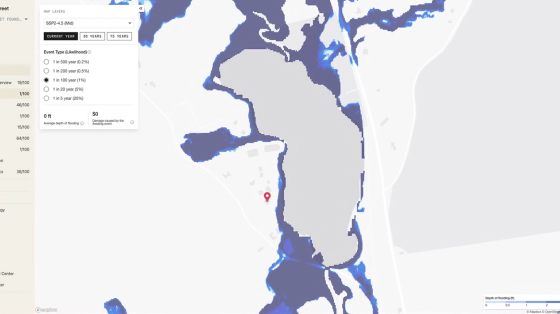
Until now, this level of analysis has been reserved for the biggest sectors, the world of real estate development and finance, among others. Camps now get the capability to model previously known and unknown risk — for FREE.
When It Exists, It Becomes the Expectation
Tools like this will likely change field-wide practice. Once they exist and the field has easy access, not using them becomes a tough-to-understand choice.
The criminal background check is the cleanest analogy. Once a national sex offender registry existed, virtually every camp out there checked it for every hire. The standards, rules, and laws changed to require it in most places. The expectation reset the moment the registry went live and became accessible.
The powerful predictive tool being shared with incredible generosity by First Street works the same way. The moment every camp in America can run a site-specific flood, wildfire, wind, and heat assessment, the field’s expectation of itself shifts. It will likely reset what every camp does, as well as what regulators, insurers, and parents will ultimately want them to do.
The early June briefing is part of a longer arc. The field earns trust by showing up with substance, year after year.
Camps want to protect their kids. Period.
Built on ACA’s 100+-year history of helping camps to be safer and, most recently, our COVID-era work, the trust level in our organization has risen dramatically, as has our profile in the larger youth-serving space.
Amazing and wonderful grants have followed. Partnerships have bloomed. Opportunities have blossomed. That kind of belief accumulates.
The Camp Caucus is a vehicle for sharing what we are doing, as an organization and as a field, to improve safety at every camp.
But that work is never-ending, and we will have more to share in the months and years to come, on the Hill and with our community of camps and partners. There will be more rooms like this one. We’ll keep showing up.
Join the movement. Get updates on the Camp Caucus and learn how you can support camp advocacy in DC.
Scott Brody is ACA’s Government Affairs co-chair and leads the association’s advocacy efforts in Washington, DC. He served as ACA National Board Chair during the COVID-19 crisis, helping guide camps nationwide through safe reopening while securing unprecedented federal support. A camp director for more than 30 years, Scott is Director Emeritus of Camps Kenwood & Evergreen and owner of Everwood Day Camp and Camp Sewataro. He has dedicated his career to advancing the life-changing impact of camp and championing its value on a national stage.
The views and opinions expressed by contributors are their own and do not necessarily reflect the views of the American Camp Association or ACA employees.


