


Each year, ACA’s Eleanor P. Eells Award for Program Excellence honors camps that embody the spirit of the award’s namesake through their efforts to provide exceptional programming that effectively and innovatively addresses the needs of people and society through the camp experience.
We celebrate the 2026 recipients. Their programs provide youth of all backgrounds and abilities with transformative camp experiences, equipping them with the tools they need to become better stewards of the world around them — all while experiencing the joy of camp.
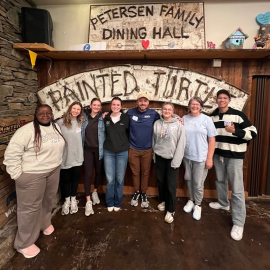
SeriousFun Leadership Fellows Program
The SeriousFun Leadership Fellows Program, developed by SeriousFun Children’s Network, was developed to intentionally invest in, retain, and inspire emerging leaders.
Fellows are full-time staff members employed by SeriousFun camps and open to team members in any department. To date, participants have come from the areas of program, operations, fundraising, behavioral health, and medical. They range in age from early 20s to late 40s.
“We want people to understand how vital investing in emerging leaders can be and to see the positive trickle effects in high-quality program delivery from these kinds of investments,” said Mike Parker, program manager, learning and education. “Creating spaces where leadership fellows can get curious about their growth, have set time and community to dig into that curiosity, then to have learning opportunities that bolster individual and professional growth has a powerful impact during a formative part of these professionals’ careers, which we have seen positively impact our camps and campers.”
Leadership fellows receive tailored support throughout the year, including opportunities to:
- Attend the ACA National Conference
- Receive support from a mentor within SeriousFun Children’s Network
- Work with a professional leadership coach
- Work on a new or improved initiative proposal for their camp
- Visit another SeriousFun camp
- Join virtual connects with their Fellows Program cohort
“We hope this program can be a continued opportunity for emerging leaders to grow professionally, expand their network, and to increasingly view camp as a career, not simply a stop on their professional journey,” said Parker. “In the future we’d love to expand how we collect and analyze data on the impact of the program and increase avenues for alumni engagement. And of course, we want to develop systems and capacity to grow the number of program participants so that we can serve even more of the incredibly talented leaders across SeriousFun Children’s Network.”
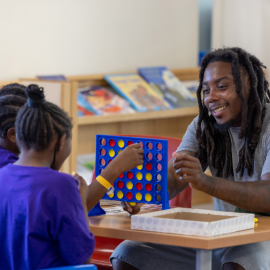
Camp Hometown Heroes and Camp Reunite (Power of Humans, Inc.)
Power of Humans, Inc. was recognized as an Eleanor P. Eells Award for Program Excellence recipient for two of their programs — Camp Hometown Heroes and Camp Reunite.
Camp Hometown Heroes is a free, weeklong, overnight summer camp for children who have lost a loved one in the US military. The camp aims to help children begin and continue the healing process with other children who have experienced a similar loss. The program uses both traditional summer camp activities and grief support programs, providing each child with compassionate support, tailored activities, and a safe space to heal, grow, and make meaningful connections.
“We have a mental wellness director who has experience in grief and loss that allows us to have art therapy activities which allow campers to discuss or share their experiences,” said Tommy Losch, camp director. “Mental wellness programming gives our campers tools to help themselves and others.”
At age 15, campers can begin the teen leadership program, which allows them to participate in canoe trips and rock-climbing trips while discuss grief through the lens of being a teenager. At 17, they can become counselors-in-training, a full-circle moment that allows them to give back to young campers.
Camp Reunite provides hope, healing, and resiliency by strengthening the bond between children and their incarcerated parent. The program combines typical summer camp experiences and opportunities to participate in a supportive community that allows them to express their feelings related to their parent’s incarceration. Camp Reunite also partners with the Wisconsin Department of Corrections to give children the opportunity to have extended visits with their parent. They have also recently started serving an additional location in Wisconsin — Racine Correctional Institution.
“Two days of the camp week are spent at the correctional institutions, where campers participate in extended visits with their incarcerated parents, giving them the opportunity to fully embrace one another and build meaningful parent-child connections that are often not possible outside of camp,” Losch said.
In the future, Camp Hometown Heroes hopes to increase the number of campers served and provide additional weeks of camp. Camp Reunite hopes to serve more Wisconsin facilities and establish funding for a national brand.
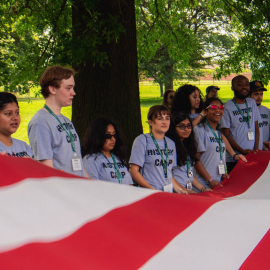
National History Academy
National History Academy (NHA), created by the Journey Through Hallowed Ground National Heritage Area in 2018, uses the immersive camp experience to address the country’s historical and civic literacy crisis.
NHA was created to inspire campers to understand the foundations of American democracy and responsibilities of citizenship. Working with other organizations such as the National Park Service, the College Board, and the Case Method Institute, NHA brings together campers from different political, ethnic, racial, geographic, religious, and socioeconomic backgrounds.
“National History Academy’s campers care deeply about our country. Young people are far more engaged in civic life than they are often given credit for. They are eager to wrestle with big questions, consider different perspectives, and have meaningful conversations, but often lack the platform to do so. They are looking for inspiration and hope for the country’s future and simply need a forum to be heard. The summer camp environment of National History Academy gives them exactly that,” said Bill Sellers, president and CEO of National History Academy. “In a supportive space and structure, campers do not shy away from complex or controversial topics. We encourage young people to approach alternate perspectives and the individuals who hold them with curiosity and respect. They leave the program not only more knowledgeable about our country, but more confident in their ability to participate thoughtfully in civic life and civil discourse. National History Academy helps them to cultivate a deeper sense that their voices and their obligations to themselves and their fellow citizens matter.”
NHA combines multifaceted academic curriculum with the camp structure to create a living-learning experience. Campers learn in the classroom, at historic sites, and in everyday camp life.
“Campers develop empathy and confidence as well as historical perspective, and the content has an even greater impact when it is experienced alongside new friends from across the country,” Sellers said. “And we have a lot of fun while learning, whether through hikes in National Park Service sites, inner tubing down Antietam Creek, ziplining, sharing recipes in our communal kitchen, or participating in club activities. National History Academy’s blend of experiential education, community living, and civic skill building makes the program a distinctive and innovative model for youth development.”
In the future, NHA aims to continue to demonstrate how camp can contribute to both individual growth and to the health of our democracy. As a nonprofit, they also hope to maintain a robust scholarship program so socioeconomic status does not prevent a barrier to access to camp. Additionally, they are working on a tool kit that can be implemented in classrooms that adapts their curriculum for use outside of their summer program.
“Ultimately, our vision is to grow a national network of students and educators who carry forward the skills and sense of responsibility fostered at National History Academy, contributing thoughtfully and constructively to their communities and to civic life,” Sellers said.
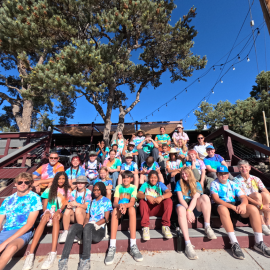
Camp Potosi Pines
For years, Camp Potosi Pines — located in the Spring Mountains just outside of Las Vegas, Nevada — has welcomed campers of all backgrounds to a place where they feel known, loved, and free to be themselves. As a ministry of the Desert Southwest Conference of the United Methodist Church, they have a longstanding commitment to creating transformative camp experiences rooted in inclusivity, spiritual growth, and outdoor adventure. More than half of their campers come from foster, kinship, or other traditionally underserved backgrounds, and Camp Potosi Pines staff work intentionally to remove barriers to camp. Through outdoor adventure, community living, leadership opportunities, meaningful relationships with caring mentors, and opportunities to explore faith in a welcoming environment, they find that campers leave with increased confidence, resilience, and a stronger sense of who they are.
“Our program is built around a sustainable volunteer-driven leadership model that develops young people into future camp leaders,” said Katharine Namchek, program director. “Through our Sparks, Flames, and Beacons leadership pathway, campers can grow from participants into counselors, mentors, and program leaders over time. This structure allows us to create meaningful leadership opportunities while maintaining affordability and expanding access to camp. We have also successfully combined scholarship fundraising, volunteer engagement, leadership development, and faith formation into a single ecosystem that strengthens the camp experience for everyone involved. The result is a program that serves campers today and actively develops the next generation of leaders who will sustain the program and carry its values forward in their communities.”
In the future, Namchek hopes that the program continues to be a model for accessible, high-impact, outdoor youth development. Camp Potosi Pines also aims to expand scholarship opportunities, grow their leadership development pipeline, and strengthen partnerships with schools, churches, and community organizations.
“Ultimately, I want the program to be known not only for creating exceptional camp experiences but for helping young people discover that they are loved, valued, and capable of making a difference,” Namchek said. “If campers leave with stronger faith, deeper relationships, greater confidence, and a commitment to serving others, then we have succeeded in our mission.”
Camp Glen Brook
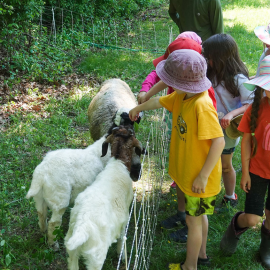
Situated on a 250-acre forest and farm campus, Camp Glen Brook has been a place of self-discover, community, and connection to nature since 1946.
Camp Glen Brook offers a variety of programs, including summer, winter, and family camps, a gap semester program for students ages 18–21, and year-round school programs. Glen Brook aims to nurture a sense of personal responsibility for the world around them as well as developing sustainability practices — and their farm-to-table program is at the heart of that experience.
The farm-to-table program is fully integrated within daily camp life. They grow a majority of the food they serve, and campers are a part of every step of the process, from tending crops to harvesting to preparing meals.
“There’s something powerful about a camper eating a meal and knowing they helped make it happen,” said Executive Director Mark Stehlik. “That direct connection between their work and the well-being of the community fosters practical skills, confidence, and a deeper respect for the natural world. And though casual, the end-of-meal conversations reminding each other that napkins and orange peels are compost, while leftover food goes to the pigs or chickens, are empowering and show the importance of cumulative little decisions.”
Glen Brook’s program is further sustaining with the addition of a new greenhouse that heats itself throughout the winter and the recent addition of a solar array that produces their electricity and generates scholarship funding.
“The heart of it is about reconnecting young people to something essential and doing it in a way that is immersive, meaningful, and rooted in real responsibility,” Stehlik said. “Keeping the important things as simple as they have been for 81 years, our innovation is focused on how to meet today’s children in a way that inspires them to connect with what we have to offer.”
In the future, Camp Glen Brook hopes to deepen the impact of their farm-to-table program as well as expand access so more young people can have meaningful, hands-on experiences. They want every camper to leave with a stronger understanding of how all their actions are impactful to themselves and the world — from choices they make about where food comes from to understanding the value of conflict resolution and joyful play. They also hope these actions expand beyond their program.
“Ultimately, our goal is not just what happens at camp, but who our campers become afterward,” Stehlik said. “If they leave Glen Brook with a stronger sense of stewardship, compassion, and purpose — and see themselves as caretakers of their communities and the land — then we’re doing it just right.”
Eleanor P. Eells Award for Excellence in Research in Practice
Also given each year since 2015, The Eleanor P. Eells Award for Excellence in Research in Practice honors camp programs that:
- Develop and implement or apply an exemplary research or evaluation project
- Use research or evaluation findings to improve program practice
- Develop model research or an evaluation project that can be adapted or replicated
- Share research or evaluation findings with others
We salute this year’s winner.
Seacamp Association, Inc.
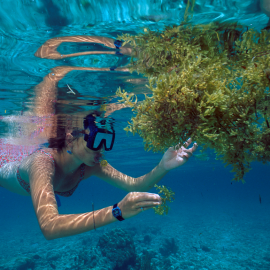
For 60 years, Seacamp Association, Inc. has served youth interested in immersing themselves in marine science and water sports, aiming to create awareness of the complex and fragile marine world while fostering critical thinking and informed decision-making with regard to the earth’s natural resources.
Located in Big Pine Key, Florida, Seacamp is one of the few organizations in the United States that provide experiential education in marine studies to students ages 10–21 years old. They offer several programs year-round, including an overnight summer camp with one-week or two-week sessions that focus on marine research and exploration using snorkeling and SCUBA skills (with additional opportunities for sailing, windsurfing, and arts and crafts), as well as day camp programs with a weekly marine science focus. They also offer customized, short-term, overnight marine science field experiences to schools and other organized groups throughout the year.
While Seacamp has always gathered valuable feedback and data from visiting schools, campers, and staff, they recently became even more intentional about gathering this data to make their program more innovative.
“We recently implemented the use of Net Promoter Score (NPS) surveys for all of our program participants as a means to more intentionally quantify program successes and areas for growth,” said Camp Director Judy Gregoire. “Recent grant funding has also provided the incentive and ability to quantify knowledge gain and student affective domain dispositions within our science programs as a means to reflect upon and improve program quality and objectives. Seacamp’s programs continue to grow each year through new partnerships and through grant funding, and we feel that program assessments are an integral part of this growth.”
In addition to the research that comes from program assessment and evaluation, Seacamp also partners with marine scientists on research around coral growth and habitat restoration.
“Coral reefs are currently a declining ecosystem that have become the focus of many different restoration efforts,” Gregoire said. “By partnering with scientists who are conducting the boots-on-the-ground (or in the water) research to protect these species and ecosystems, Seacamp staff are able to design curriculum for our year-round programs that focus on these research projects and will hopefully inspire the next generation of scientists and educators to continue these restoration efforts.”
Seacamp hopes to continue to impact as many youth as they are able for years to come.
Kaley Amonett is ACA’s editorial communications manager.


